1.
In Blog 1 we explained the internal structure and working principle of double shaft shredders, and mentioned that it is the most versatile primary pretreatment equipment in the solid waste industry. The question we receive most frequently from new buyers is: exactly what materials can my shredder handle? Many people assume dual-shaft machines can "shred everything", but from our 200+ installed projects worldwide, that is not the case.
Feeding unsuitable material is the number one cause of premature blade wear, shaft bending and gearbox damage. For example, thin color steel tiles run smoothly on a standard 800-type shredder, but a solid steel ingot of the same size will chip the blades and may even twist the main shaft after just one feeding. Knowing which materials are suitable, which need pre-treatment, and which are strictly forbidden, directly determines your equipment service life and operating cost.

2. Scrap Metal Materials (Most Common Industrial Application)

Double shaft shredders are widely used in scrap metal yards, but they are not designed for all types of metal. They perform best on thin-walled, hollow and sheet-type metal scrap; solid and extra-thick metal blocks are not suitable for standard models.
2.1 Thin Steel Sheets & Color Steel Tiles
This is the most typical and lowest-loss material for double shaft shredders. Discarded color steel tiles, iron sheets, tin cans, steel drums and thin scrap frames all fall into this category.
Max feeding size: ≤1200mm wide sheets or whole steel drums (≤200L)
Discharge size: 50–150mm irregular pieces
Typical hourly output (800-type machine): 3–6 tons per hour
Volume reduction ratio: 40–50%
Field note: Curled and deformed color steel tiles may bounce at the feeding port. For yards processing large volumes, adding a hydraulic pusher is a worthwhile upgrade - it reduces idle time by 20–25% and keeps feeding speed stable.

2.2 Aluminum Alloy & Non-Ferrous Metal Scrap
Aluminum alloy doors and windows, aluminum profiles, discarded radiator shells, copper sheets and other non-ferrous metals can all be shredded. Since non-ferrous metals have higher toughness and lower hardness than steel, they cause less blade wear than iron materials.
Max feeding size: ≤1000mm long profiles
Discharge size: 40–120mm broken pieces
Typical hourly output: 3.5–6.5 tons per hour
Blade wear rate: About 30% lower than processing carbon steel
Processing tip: After shredding, match with an eddy current separator to sort aluminum from iron impurities. This combination is the standard configuration for most modern non-ferrous metal recycling lines.

2.3 Car Shells & Light Husk Scrap
Dismantled car shells, motorcycle frames, bicycle frames and other hollow light steel scrap are also very suitable. Shredding breaks the whole shell into small pieces, which greatly improves transportation density and facilitates subsequent magnetic separation and sorting.
Max feeding size: ≤1500mm whole half-car shell
Discharge size: 60–180mm mixed pieces
Typical hourly output: 2.5–4.5 tons per hour
Value added after shredding: Single truck loading weight increases by 40–50%

2.4 What Metal Cannot Be Shredded (Important)
This is the part many first-time buyers ignore. Standard double shaft shredders cannot handle the following metal materials; forcible feeding will cause permanent damage:
Solid steel ingots, thick manganese steel blocks, cast iron blocks and other solid bulk metal (thickness over 50mm is not recommended for standard models)
Sealed high-pressure gas cylinders, oil tanks with residual flammable liquid (explosion risk)
Stainless steel thick castings and high-hardness alloy materials (extremely fast blade wear)
We have handled many after-sales cases where buyers accidentally mixed solid steel blocks into the feed. A single hard impact can chip 2–3 blades and even cause micro-bending of the main shaft, which is almost impossible to repair on site. For yards with mixed incoming materials, installing a manual sorting platform before feeding is the cheapest protection measure.
3. Waste Home Appliances & Electronic Waste
Whole waste appliances cannot be directly sorted or granulated. Double shaft shredders serve as the first step of the e-waste dismantling line, coarsely breaking complete products into mixed fragments for subsequent metal-plastic separation.
3.1 Large White Goods (Refrigerators, Washing Machines, Air Conditioners)
Discarded refrigerators, drum washing machines, outdoor air conditioner units and other large appliances are the most representative bulky e-waste. Manual disassembly is slow and labor-intensive; shredding pretreatment greatly improves efficiency.
Pre-treatment requirement: It is recommended to remove the compressor and refrigerant first, especially for refrigerators; direct shredding of refrigerant may cause safety hazards.
Max feeding size: ≤1500mm complete appliance
Discharge size: 80–200mm mixed fragments of iron, aluminum, plastic and copper
Typical hourly output: 3–5 tons per hour
Value analysis: After shredding + magnetic separation + eddy current sorting, the metal recovery rate of waste refrigerators can reach more than 95%, which is 15–20% higher than pure manual disassembly.
3.2 Small Household Appliances and Plastic-Cased Electronic Products Small household appliances such as fans, rice cookers, microwave ovens, and computer mainframes can be directly fed into the equipment after simple collection. Due to the high proportion of plastic casings, the crushing load is lighter than that of pure metal. Maximum feed size: finished product ≤ 800mm; output size: 50-150mm mixed fragments; typical hourly output: 4-6 tons/hour. On-site tip: Small household appliances often contain wires and circuit boards. It is recommended to use a gravity separator to separate copper wires and metal particles, which can significantly improve the profit per ton of material.
4.
Plastic and Rubber Waste: Plastics are among the most widely processed materials by twin-shaft crushers. Different forms of plastic have drastically different crushing effects and failure risks. Flexible rolls are the most prone to problems.
4.1 Plastic Films, Woven Bags, and Flexible Packaging
Agricultural film, packaging film, ton bags, woven bags and other soft filamentous materials are very common in recycling stations. Such materials are light in texture and easy to bounce, but also the easiest to wrap around the shaft.
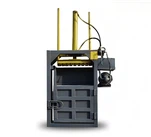
Recommended feeding form: Bale compressed by a baler first; loose film feeding will seriously reduce output.
Discharge size: 30–150mm strips and pieces
Typical hourly output: 2–5 tons per hour (based on compressed bales)
Volume reduction ratio: 70–80%
Common problem & solution: Film materials easily wind around the main shaft, which will increase motor load and even cause overheating shutdown. For yards that process film all year round, choose a model with anti-winding blade design and clean the winding material regularly every 4–6 hours of operation.
4.2 Hard Plastic, Drums & Injection Molding Scrap
Plastic buckets, turnover boxes, plastic pallets, injection molding head material and other hard rigid plastics have good shredding effect and low winding risk. They are the most trouble-free plastic materials for double shaft shredders.
Max feeding size: ≤1200mm whole plastic pallet or 200L plastic drum
Discharge size: 40–120mm plastic blocks
Typical hourly output: 3–6 tons per hour
Processing advantage: Shredded hard plastic pieces can directly enter the plastic granulator for secondary fine processing, which effectively avoids granulator jamming and increases the overall output of the granulation line by 30–40%.
4.3 Waste Tires & Rubber Products
Car tires, truck tires, rubber conveyor belts and other rubber products have high toughness and require higher torque from the shredder. Small tires can be processed by standard models; large engineering tires need heavy-duty models.
Applicable tire size: Standard models ≤1200mm diameter car and truck tires; oversize tires need pre-cutting
Discharge size: 50–120mm rubber blocks
Typical hourly output: 2–4 tons per hour
Matching suggestion: Tire shredding is usually the first step of the tire recycling line. After primary shredding, it is matched with a secondary granulator and fiber separator to finally obtain rubber powder and steel wire, realizing full resource recovery.
5. Wood & Municipal Bulky Waste
Wood and bulky waste are the materials with the most obvious volume reduction effect after shredding. Loose furniture and mattresses occupy several times the space of other waste, and shredding can directly reduce storage and transportation costs.
5.1 Waste Wood, Pallets & Old Furniture
Discarded wooden pallets, solid wood furniture, wooden doors, floorboards and other wood materials can be easily shredded. Since wood has low hardness, blade wear is very slow, and the long-term operating cost is low.
Max feeding size: ≤1500mm whole furniture or pallet
Discharge size: 80–200mm wood fragments
Typical hourly output: 4–8 tons per hour
Volume reduction ratio: 60–70%
Subsequent use: Shredded wood pieces can be sold to biomass power plants, board factories or mushroom cultivation bases, turning waste into directly sellable raw materials.
5.2 Municipal Bulky Waste (Sofas, Mattresses)
Old sofas, mattresses, spring beds and other bulky waste are the most headache materials for municipal waste stations. They are large in size, low in value, and take up a lot of space for landfill.
Processing difficulty: Medium; springs inside mattresses may cause slight impact on blades
Discharge size: 100–250mm mixed fragments
Typical hourly output: 3–5 tons per hour
Volume reduction ratio: 55–65%
Process flow: After shredding, iron springs are removed by magnetic separator, and the remaining fabric and sponge can be sent to incineration power plants for energy utilization, greatly reducing the landfill volume.
6. Quick Reference Table: Material & Processing Parameters
The table below summarizes all mainstream materials and their standard processing parameters based on a standard 800-type double shaft shredder (37kW power) for quick reference:
|
Material Category |
Typical Materials |
Hourly Output |
Discharge Size |
Processing Difficulty |
|---|---|---|---|---|
|
Thin Scrap Metal |
Color steel tile, iron sheet, steel drum |
3–6 t/h |
50–150mm |
Low |
|
Non-Ferrous Metal |
Aluminum profile, copper sheet, radiator |
3.5–6.5 t/h |
40–120mm |
Low |
|
Waste Home Appliances |
Refrigerator, washing machine, AC unit |
3–5 t/h |
80–200mm |
Medium |
|
Flexible Plastic |
Film, woven bag, ton bag |
2–5 t/h |
30–150mm |
Medium (easy to wind) |
|
Hard Plastic |
Plastic drum, pallet, injection scrap |
3–6 t/h |
40–120mm |
Low |
|
Rubber & Tires |
Car tire, rubber belt |
2–4 t/h |
50–120mm |
Medium |
|
Wood & Furniture |
Pallet, old furniture, wooden door |
4–8 t/h |
80–200mm |
Very low |
|
Bulky Waste |
Sofa, mattress, spring bed |
3–5 t/h |
100–250mm |
Medium |
7. Conclusion
Double shaft shredders have excellent adaptability to most common solid wastes, including thin metal, home appliances, various plastics, rubber, wood and bulky waste. But they are not universal crushing equipment - solid thick steel, flammable and explosive materials, and high-hardness alloy blocks are strictly forbidden to be fed into standard models.
Judging whether your material is suitable, matching the corresponding blade material and shaft torque, and doing a good job of pre-sorting and pre-treatment can maximize the equipment efficiency and service life. In the next blog, we will explain the classification of double shaft shredder models, selection methods and matching schemes for different output requirements in detail.

If you have any questions, such as "How do I choose equipment for my new recycling plant, and which model should I choose?", "How long does it take to customize a machine?", or "Is the export customs clearance process complicated?", please feel free to contact us. We will recommend the most suitable model based on your specific business needs, site size, and budget, and provide one-on-one customized solutions to help you "turn waste into treasure" and easily generate profits!
Contact information
Contact name: Jonathan Lee
Email: sales01@rjrecyclingequipment.com
Cell phone: +86 183 9200 1872
Whatsapp: +86 183 9200 1872