1.
In solid waste recycling, pre-shredding is almost always the first step of any processing line. Loose waste takes up 3 to 5 times more space than compacted material, oversized pieces cannot be fed directly into sorting or granulating equipment, and mixed scrap with irregular shapes causes frequent jams and wear on downstream machines. From the 200+ waste recycling projects we've installed across 28 countries, the double shaft shredder is by far the most widely used primary pretreatment equipment for mixed solid waste.
Many new buyers know shredders "break things into smaller pieces", but few understand how the dual-shaft structure works, why it handles almost all types of waste, or what kind of output it produces for different materials. Choosing the wrong shredder type - for example using a single-shaft granulator for bulky metal scrap - leads to constant breakdowns, 2–3 times faster blade wear, and even permanent damage to the main shaft.

2. Pain Points of Traditional Solid Waste Pretreatment
Before professional shredders became standard, most recycling yards relied on manual cutting, simple shearing or direct compaction for waste pretreatment. These methods all have obvious bottlenecks that limit production scale and profit:
- Extremely low processing efficiency. Manual cutting and disassembly can only handle small batches. For bulky waste like old furniture, discarded pallets and waste metal frames, a team of 3 workers can process less than 2 tons per shift, unable to keep up with large incoming material volumes.
- Serious transportation waste. Loose plastic, foam, cardboard and hollow metal parts occupy huge volume during transport. Most trucks reach volume limit before reaching weight limit, resulting in 40–60% wasted freight cost per trip.
- High downstream equipment failure rate. Feeding oversized and irregular waste directly into crushers, granulators or sorting machines causes frequent jams, blade chipping and even motor burnout, raising maintenance costs sharply.
- Low sorting efficiency. Mixed waste in large pieces cannot be effectively sorted by magnetic separators, air separators or optical sorting equipment, resulting in low purity of finished materials and lower selling prices.
- Safety hazards. Manual cutting of large and hard waste involves high risk of injury from sharp edges and bouncing fragments, and long-term heavy physical labor leads to high staff turnover.
3. What Is a Double Shaft Shredder?
A double shaft shredder, also called dual-shaft shear shredder, is a heavy-duty primary reduction machine designed for bulky, mixed and high-toughness solid waste. It uses two parallel rotating shafts fitted with staggered cutting blades to shear, tear and squeeze incoming material into smaller, uniformly sized pieces through low-speed, high-torque rotation.
Unlike single-shaft granulators that rely on high-speed impact crushing, double shaft shredders run at low rotating speed (usually 10–30 rpm) with very high torque. This design allows them to handle hard, tough and even partially unbreakable objects without immediate damage. They are the most versatile primary shredding equipment in the solid waste industry, suitable for almost all common waste types except extra-hard large metal blocks.


4. Internal Structure & Core Components
The reliability of a double shaft shredder depends almost entirely on the quality of its core components. A standard industrial-grade machine consists of the following key parts:
Dual cutting shaft assembly: Two parallel alloy steel main shafts, with multiple movable cutter heads mounted in staggered arrangement. The shafts are driven by a gear reducer to rotate towards each other at low speed and high torque.
Movable & fixed blades: Movable blades are installed on the shaft, fixed blades are mounted on the chamber wall. They form precise shear gaps during rotation. High-quality blades are made of high-chromium manganese alloy steel, with surface hardness reaching HRC58–62 after heat treatment.
Reducer & drive system: Heavy-duty gear reducer converts high-speed motor rotation into low-speed high-torque output, providing continuous and stable shredding force. Good reducers can run continuously for 8,000+ hours without failure under rated load.
Hydraulic feeding/pushing system: Equipped on medium and large models, it pushes material towards the cutting area to prevent light and fluffy materials from bouncing, ensuring continuous and even feeding.
Overload protection system: When unbreakable hard objects (such as solid steel blocks) enter the chamber, the system automatically reverses the shafts and triggers an alarm to avoid blade chipping and shaft bending.
Frame & discharge hopper: Thickened steel plate welded frame bears long-term impact vibration. The bottom discharge opening can be matched with belt conveyors for automatic material transfer.
5. Step-by-Step Working Principle
The working process of a double shaft shredder is continuous and automatic. Under normal operation, only feeding supervision is needed, and the equipment completes shredding independently:
Material feeding: Bulk waste is fed into the feeding hopper by forklift, conveyor or manual work. For fluffy and light materials, the hydraulic pusher plate slowly pushes the material down into the cutting zone to avoid idle rotation.
Biting & shearing: The two shafts rotate towards each other. The sharp hook-shaped cutter teeth first bite into the material, and the movable blades and fixed blades form a shear surface to cut the material into sections.
Tearing & extrusion: As the shafts continue to rotate, the interlaced cutter heads tear and squeeze the cut material further, breaking long strips and large pieces into smaller blocks along the material gap and texture.
Screening & discharging: Material is repeatedly sheared and torn between the two shafts. When the particle size becomes smaller than the gap between the cutters, it falls through the bottom of the chamber and is discharged onto the conveyor belt.
Overload protection reversal: If unbreakable hard objects enter or the load exceeds the rated value, the control system automatically reverses the shafts for 2–3 seconds, then rotates forward again. This cycle repeats 2–3 times; if the blockage still cannot be cleared, the machine stops and alarms.
This low-speed shear-tear mechanism is the reason double shaft shredders have wide adaptability. Whether it is soft plastic film, hard metal sheets or tough rubber products, they can be effectively broken .
Machine processing for reference
6. Typical Processing Parameters for Common Solid Waste
The following data is compiled from actual on-site production records of standard medium-sized double shaft shredders. Actual output will fluctuate according to material hardness, bulk density and required discharge size:
|
Waste Material Type |
Max Feeding Size |
Discharge Particle Size |
Hourly Processing Capacity |
Volume Reduction Ratio |
|---|---|---|---|---|
|
Waste cardboard / paper |
≤1200mm bales |
50–200mm flakes |
4–7 t/h |
65%–75% |
|
Waste plastic film / woven bags |
≤1000mm bales |
30–150mm strips |
2–5 t/h |
70%–80% |
|
Thin scrap iron / color steel tile |
≤1200mm sheets |
50–150mm pieces |
3–6 t/h |
40%–50% |
|
Waste rubber / tires |
≤1200mm whole tires |
50–120mm blocks |
2–4 t/h |
50%–60% |
|
Waste wood / furniture |
≤1500mm pieces |
80–200mm fragments |
4–8 t/h |
60%–70% |
|
Municipal bulky waste |
≤1500mm mixed pieces |
80–250mm mixed pieces |
3–5 t/h |
55%–65% |
7. Core Applications in Solid Waste Recycling Industry
Double shaft shredders are used in almost all solid waste细分 fields, and their value is reflected in different links according to different processes:
7.1 Scrap Metal Recyclinga
For color steel tiles, iron sheets, aluminum alloy doors and windows, discarded car shells and other metal scrap, the shredder breaks large sheets into small pieces, which greatly increases the bulk density of materials. After shredding, each truck can load 40–50% more weight, and the material is easier to be sorted by magnetic separators. It is also a necessary pretreatment equipment before metal granulation and smelting.
7.2 Waste Plastic & Rubber Recycling
Large bales of plastic film, woven bags, waste buckets, tires and rubber products are first shredded into small pieces by a double shaft shredder, then enter the subsequent granulator and cleaning line. This can effectively avoid jamming of the granulator and improve the overall output of the plastic recycling line by 30–40%.
7.3 Municipal Bulky Waste Treatment
Old sofas, furniture, mattresses, wooden doors and other bulky waste cannot be directly landfilled or incinerated. After shredding, the volume is reduced by more than 60%, and then combustibles, metals and recyclable materials are sorted out through the sorting line, which maximizes resource recovery and reduces landfill pressure.
7.4 Industrial Hazardous Waste & General Industrial Waste
Industrial packaging barrels, chemical barrels, waste pallets, factory offcuts and other industrial waste are shredded to a uniform size, which facilitates subsequent safe disposal, incineration or resource reuse. The enclosed shredding chamber can also control dust and odor diffusion.
7.5 Electronic Waste & Home Appliance Dismantling
Whole waste refrigerators, washing machines and circuit boards are coarsely shredded first, and then copper, iron, aluminum and plastic are separated step by step through sorting equipment. Compared with manual disassembly, the efficiency is increased by more than 5 times, and the metal recovery rate is also higher.
Processable materials


8. Common Misunderstandings First-Time Buyers Have
Summarized from customer consultation records, the following three misunderstandings are the most likely to cause wrong purchase and later losses:
Misunderstanding 1: "Faster speed means higher efficiency". In fact, double shaft shredders rely on torque rather than speed. High-speed models have greater impact, faster blade wear and higher failure rate. For most solid waste, 15–25 rpm is the most cost-effective speed range.
Misunderstanding 2: "All shredders can shred everything". Although the double shaft structure has strong adaptability, it also has limits. For example, solid steel ingots and thick manganese steel blocks cannot be shredded by ordinary models. Forcible feeding will directly damage the main shaft.
Misunderstanding 3: "The cheaper the machine, the more cost-effective". The biggest long-term cost of a shredder is not the equipment itself, but blade replacement and maintenance. Low-price machines usually use ordinary steel blades, which may chip or wear out in 2–3 months. The cost of replacing blades once is close to 10% of the equipment price.
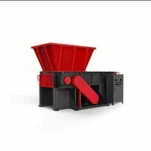
Below are different models of twin-shaft crushers manufactured by RJ Machinery. They differ in processing capacity and application scenarios, but all offer extremely high stability and cost-effectiveness, helping you quickly recoup your costs and maximize profits. Customers can click on the images for more information.

|
Model |
E-CR800 |
|
Feeding hole size |
1600*1600mm |
|
Crusher size |
800x800mm |
|
Power |
22kw * 22kw |
|
Process capacity |
800~1200kg/h |
|
Rotary speed |
18~25r/min |
|
Weight |
4000KG |
|
Measurement |
2.7*0.9*2M |

| Model | E-CR600 |
| Feeding hole size | 1200*1200mm |
| Crusher size | 600x600mm |
| Power | 15kw * 15kw |
| Process capacity | 2t~3.5tons/h |
| Rotary speed | 18~25r/min |
| Weight | 2300KG |
| Measurement | 2.4*1.03*1.7M |

| Model | V-CR400 |
| Feeding hole size | 600*600mm |
| Power | 11kw * 11kw |
| Process capacity | 400kg/h |
| Weight | 800KG |
| Measurement | 1.3*0.6*1M |
9. Conclusion
As the most universal primary pretreatment equipment in the solid waste recycling industry, the core value of the double shaft shredder lies in its low-speed high-torque shear-tear mechanism, wide material adaptability and stable and reliable operation. It can effectively solve the pain points of bulky waste transportation, downstream equipment jamming and low sorting efficiency, and is the standard configuration for large-scale and standardized waste treatment.
Understanding its working principle and processing parameters is the first step to choose the right model. In the following blogs of this series, we will continue to explain the classification of double shaft shredder models, detailed selection methods, daily maintenance and common fault troubleshooting, and production line matching schemes.

If you have any questions, such as "How do I choose equipment for my new recycling plant, and which model should I choose?", "How long does it take to customize a machine?", or "Is the export customs clearance process complicated?", please feel free to contact us. We will recommend the most suitable model based on your specific business needs, site size, and budget, and provide one-on-one customized solutions to help you "turn waste into treasure" and easily generate profits!
Contact information
Contact name: Jonathan Lee
Email: sales01@rjrecyclingequipment.com
Cell phone: +86 183 9200 1872
Whatsapp: +86 183 9200 1872