


1. Introduction: Why Troubleshooting Is Critical for Copper Recycling Profit

1.The copper granulator is the core high-efficiency equipment for waste wire recycling lines. However, like all industrial mechanical equipment, long-term high-load continuous operation will inevitably lead to various abnormal problems if lacking standardized maintenance and correct operation. For recycling plant owners, small equipment faults mean reduced copper purity, increased material loss, lower daily output, and directly shrinking profits.
2.Most new operators only focus on production speed and ignore minor equipment abnormalities, resulting in four most common industry failures: unclean separation, high copper content in plastic material, frequent material jamming and blockage, and gradual production decline. These problems are the main causes of low recycling yield and unstable factory operation.
2.Troubleshooting and Solutions
2. Fault 1: Incomplete separation (copper and plastic are not completely separated)
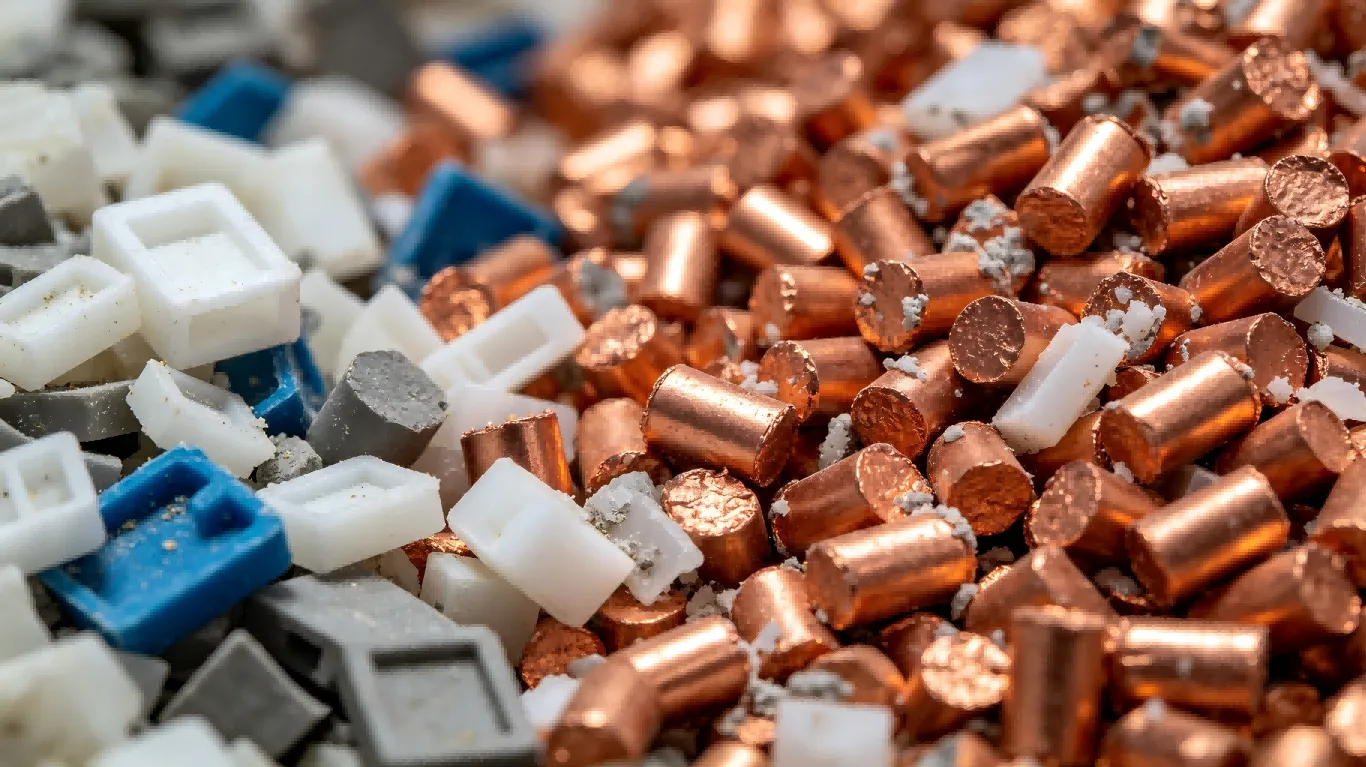
Unclean copper-plastic separation is the top common fault of copper granulators, manifested as plastic residue adhering to copper granules or copper fragments wrapping in plastic scraps. It directly reduces copper purity, making recycled copper fail to meet industrial-grade standards and lower resale value.
Core Causes
1. Excessively large blade crushing gap leads to incomplete dissociation of copper and plastic.
2. Worn, blunt blades cannot fully cut multi-layer or thick wire insulation.
3. Unstable fan wind volume breaks the gravity separation balance.
4. Over-fast feeding causes material accumulation and insufficient crushing time.
Effective Solutions
1.Fine-tune blade gap according to wire thickness to ensure one-time complete dissociation.
2.Timely replace severely worn alloy blades to guarantee precise cutting.
3.Calibrate fan wind speed to maintain stable gravity sorting.
4. Adopt uniform, slow feeding to avoid material accumulation.
Preventive Measures
Check blade clearance and fan operating parameters before daily startup, test separation effect with a small amount of materials first, and start mass production after confirming pure separation quality.
3.Fault 2: High Copper Residue in Plastic Waste

High copper residue in plastic waste is a major invisible profit loss for recycling plants. A large number of fine copper particles mix in discharged plastic scraps, causing 3%-8% long-term copper loss if left unaddressed.
3.1 Main Root Causes
1. Mismatched screen mesh size: Excessively large screen holes cause fine copper particles to pass through the screen and be discharged with plastic waste.
2. Excessive fan wind force: Too strong wind blows light small copper particles into the plastic discharge port, causing copper waste.
3.Damaged dust removal system: The dust collector fails to absorb fine copper powder, resulting in fine copper loss with dust and plastic residues.
4.Processing ultra-fine wires with ordinary configuration: Ordinary granulators lack fine sorting structure, unable to capture ultra-fine copper particles.
3.2 Complete Troubleshooting & Solutions
1.Replace fine mesh screen: Equip dense mesh screen for processing fine electronic wires to block fine copper particles and avoid leakage loss.
2.Reduce fan wind speed appropriately: Calibrate wind force repeatedly to ensure only light plastic is blown out, while heavy copper particles sink to the finished material outlet.
3.Inspect and repair dust removal equipment: Clean dust collector filter elements regularly to ensure normal dust absorption and recover fine copper powder.
4.Upgrade fine sorting system: For long-term processing of ultra-fine wires, equip secondary fine sorting device to reduce copper loss to nearly zero.
3.3 Preventive Measures
Regularly sample and check plastic waste residues, detect copper content in time, and adjust equipment parameters dynamically according to different wire materials to avoid long-term invisible loss.
4. Fault 3: Equipment Jamming and Material Blockage

Material jamming and blockage are sudden hazardous faults, which easily cause motor overload, automatic shutdown, blade deformation and even main engine burnout, interrupting continuous production.
4.1 Core Causes
Bulk fast feeding exceeds equipment instantaneous processing load.
Hard foreign matters (iron blocks, stones) mixed in wires jam the crushing cavity.
Tangled, oil-stained automotive harnesses wind around blades and rollers.
Aging belts or insufficient motor power cause unsmooth material transmission.
Unclean residual materials in the cavity cause startup jamming.
4.2 Effective Solutions
Cut off power immediately to clean blocked materials and inspect blade damage.
Adopt intermittent uniform feeding to avoid overloading.
Pre-screen raw materials to remove hard foreign matters before processing.
Install anti-winding devices for tangled automotive harness processing.
Regularly check and replace aging transmission belts to stabilize power output.
4.3 Preventive Measures
Clean residual materials after daily operation, pre-sort raw materials before production, and strictly prohibit long-term overload operation.
5. Fault 4: Gradual Production Output Decline
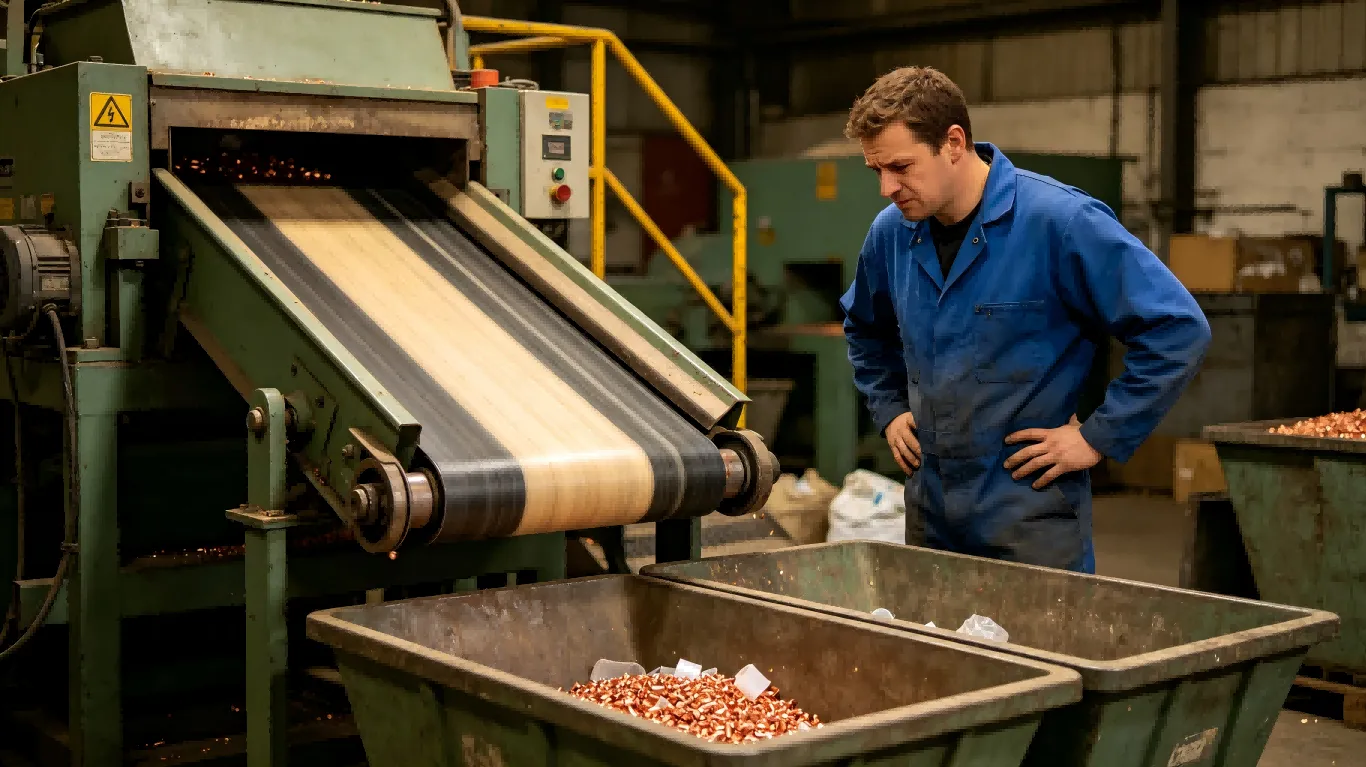
Gradual output decline is a easily ignored latent fault. Most granulators suffer decreasing daily processing capacity after 3-6 months of operation, directly reducing overall factory output and profits.
5.1 Core Causes
Worn blunt blades reduce crushing and cutting efficiency.
Blocked screen holes hinder material screening and circulation.
Unstable voltage and overload operation cause motor power attenuation.
Insufficient lubrication increases mechanical operating resistance.
Internal dust accumulation affects fan and sorting system efficiency.
5.2 Effective Solutions
Polish or replace worn blades regularly to restore cutting performance.
Thoroughly clean blocked screen mesh to ensure smooth material circulation.
Equip a voltage stabilizer to stabilize motor working power.
Add professional lubricating oil to transmission parts weekly.
Completely clean internal dust and debris of the whole machine regularly.
5.3 Preventive Measures
Develop standardized daily inspection and weekly maintenance habits to keep the equipment in optimal working condition and stable output.
3.Quick Reference Troubleshooting Table (Core for Daily Operation)
The following table summarizes all core faults, causes and solutions, convenient for operators to quickly check and solve problems on site:
|
Common Fault |
Core Causes |
Fast Solution |
|---|---|---|
|
Unclean separation |
Blunt blade, unreasonable gap, unstable wind force, fast feeding |
Adjust blade gap, replace worn blades, calibrate fan speed, control uniform feeding |
|
High copper in plastic |
Large screen holes, excessive wind, dust system failure |
Replace fine mesh screen, reduce wind speed, clean dust collector |
|
Material jamming & blockage |
Overfeeding, foreign matter mixing, wire winding, aging transmission parts |
Clean blocked materials, pre-sort raw materials, install anti-winding device |
|
Output decline |
Blade wear, blocked screen, lack of lubrication, dust accumulation |
Maintain wearing parts, clean equipment thoroughly, regular lubrication |
4.Standard Daily Maintenance Tips to Avoid All Faults

Most copper granulator faults are caused by irregular operation and lack of maintenance. Adhering to standardized daily maintenance can reduce equipment failure rate by more than 90% and extend service life effectively.
1. Pre-operation inspection: Check blade sharpness, screen integrity, fan operation and belt tightness before starting the machine every day.
2. Raw material pre-sorting: Remove hard foreign matters and severely tangled wires in advance to avoid equipment damage.
3. Uniform feeding operation: Strictly follow the equipment load standard, prohibit overfeeding and overload operation.
4. Post-operation cleaning: Clean residual materials and dust inside the equipment after daily production to avoid long-term accumulation.
5. Regular lubrication and replacement: Lubricate transmission parts weekly and replace wearing parts regularly according to service conditions.
5.Conclusion
The four major common faults of copper granulators, including unclean separation, high copper residue in plastic, material blockage, and reduced output, are the key factors restricting the profit of waste wire recycling factories. Most failures are not equipment quality problems, but caused by improper operation, parameter mismatch and insufficient daily maintenance.
By accurately judging fault causes, adopting targeted troubleshooting schemes, and forming standardized operation and maintenance habits, recycling investors can completely avoid invisible copper loss and production shutdown losses. Keeping the copper granulator in stable and high-efficiency operation is the core key to ensuring long-term high yield, high purity and high profit of waste copper recycling business.
 If you have any questions, such as "How do I choose equipment for my new recycling plant, and which model should I choose?", "How long does it take to customize a machine?", or "Is the export customs clearance process complicated?", please feel free to contact us. We will recommend the most suitable model based on your specific business needs, site size, and budget, and provide one-on-one customized solutions to help you "turn waste into treasure" and easily generate profits!
Contact information
Contact name: Jonathan Lee
Email: sales01@rjrecyclingequipment.com
Cell phone: +86 183 9200 1872
Whatsapp: +86 183 9200 1872