1. Introduction: Why Targeted Debugging Matters for Wire Stripping
1. Most wire stripper malfunctions are not due to machine quality issues, but rather to a mismatch between blade clearance and roller pressure for different types of wires. Many recyclers process all cables directly using fixed machine parameters, leading to four common problems: incomplete stripping, copper core scratches, wire slippage, and wire jamming.
2. Different types of scrap wires, including thin wires, thick, stiff cables, soft rubber wires, and armored cables, vary significantly in terms of sheath hardness, copper core toughness, wire diameter, and number of structural layers. Each type of wire requires individual adjustments to blade height, roller pressure, and feed speed.
2. Stripping Difficulties + Standard Debugging for 4 Common Wires
We classify the most frequently processed cables in recycling stations, match exclusive peeling methods and machine parameters respectively, all operations can be completed directly on site without professional technical support.
2.1 Thin Wires (2mm - 6mm Wire Diameter)
Core Stripping Difficulties
1. Small wire diameter, soft copper core, extremely easy to cut through and damage inner copper wire if blade gap is too small
2.Light wire weight, easy to slip between traction rollers, leading to incomplete partial peeling
3.Thin insulation layer, slight parameter error will cause copper core scratch
Exact Machine Debugging Method
1.Blade gap: Minimize blade cutting depth, only cut through outer insulation skin without touching copper core
2.Roller pressure: Appropriately increase roller clamping force to prevent thin wire slipping
3.Feeding speed: Low-speed stable feeding, prohibit fast feeding to avoid wire deviation
Tips to Improve Stripping Cleanliness
Arrange thin wires neatly before feeding, avoid stacked feeding; use fine-tuning micro-adjustment knob to control blade depth accurately, ensure complete separation of plastic skin and copper core without any residual insulation.
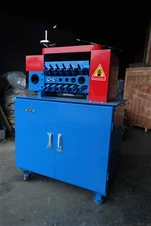
This machine, manufactured by RJ Equipment, perfectly meets your needs.

|
Model |
E-007 |
|
Wire Range |
1-40MM |
|
Power |
2.2KW |
|
Output |
200~1000KG/DAY |
|
Net Weight |
69KG |
|
Measurement |
580*440*640MM |
|
Processing holes |
7 pieces |
2.2 Thick Hard Cables (10mm - 30mm Wire Diameter)
Core Stripping Difficulties
Thick and hard outer sheath, high cutting resistance, easy to cause machine overload and pause
Large overall wire volume, easy to get stuck at feeding inlet
Thick multi-layer insulation, one-time cutting cannot peel skin completely
Exact Machine Debugging Method
Blade gap: Increase blade cutting depth moderately to penetrate thick outer sheath thoroughly
Roller pressure: Reduce roller clamping force properly to reduce machine operating load
Feeding speed: Medium low speed feeding, match strong cutting torque of thick cables
Tips to Improve Stripping Cleanliness
Cut ultra-long thick cables into 50cm-80cm fixed length before feeding; do not push wires forcibly during feeding to avoid blade deformation and incomplete cutting.
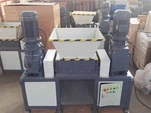
This machine, manufactured by RJ Equipment, perfectly meets your needs.

|
Model |
E-120M |
|
Power |
3KW |
|
The machine size |
740*640*1370mm |
|
Process capacity |
1000~3000kg/day |
|
Weight |
240KG |
|
Process range |
10MM-120MM |
|
Blades quantity |
2 pieces |
|
Axis quantity |
2 pieces |
|
Package way |
Plywood case |
|
Delivery way |
Sea freight or air freight |
2.3 Soft Rubber Wires
Core Stripping Difficulties
Soft rubber insulation has strong toughness, not easy to cut and separate completely
Rubber skin is easy to stick to copper core after cutting, resulting in residual rubber residue
Soft wire body is easy to deform during roller traction, causing offset peeling
Exact Machine Debugging Method
Blade gap: Expand blade cutting gap appropriately for secondary cutting to break tough rubber skin
Roller pressure: Keep medium and stable clamping force to prevent wire extrusion deformation
Feeding speed: Slow constant speed feeding, reserve enough cutting time for tough rubber layer
Tips to Improve Stripping Cleanliness
Regularly clean rubber debris adhered on blades; avoid processing damp rubber wires, damp rubber will increase adhesion and greatly reduce peeling effect.
This machine, manufactured by RJ Equipment, perfectly meets your needs.

|
Model |
E-KOC |
|
Wire Range |
1MM-90MM |
|
Power |
2.2kw |
|
Output |
400~1000KG/DAY |
|
Net Weight |
94KG |
|
Measurement |
600*580*840MM |
2.4 Armored Cables
Core Stripping Difficulties
Built-in metal steel strip armor layer, hard texture, biggest difficulty among all regular cables
Ordinary standard blades cannot cut through armor layer, leading to complete peeling failure
Multi-layer composite structure (outer plastic + steel armor + inner insulation + copper core), complex layered cutting requirement
Exact Machine Debugging Method
Blade configuration: Must match thickened hard alloy special blades instead of standard ordinary blades
Blade gap: Maximize cutting depth to penetrate outer sheath and internal steel armor at one time
Feeding speed & power: Lowest feeding speed, turn on high-torque motor mode
Tips to Improve Stripping Cleanliness
Pre-cut the cable head to expose inner armor layer before formal feeding; do not continuously feed armored cables for a long time, pause the machine every 10 minutes to cool down blades and avoid tool wear.
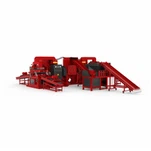
This machine, manufactured by RJ Equipment, perfectly meets your needs.

|
Model |
918-E-1 |
|
Wire Range |
2~160MM |
|
Power |
5.5KW |
| Output | 200~1000kg/day |
| Net Weight | 250KG |
| Measurement | 100x78x145CM |
3. Unified Parameter Quick Reference Table (On-site One-Click Debugging)
Save your repeated parameter testing time, check the table directly and adjust machine settings quickly for different wires:
|
Wire Type |
Blade Cutting Depth |
Roller Clamping Pressure |
Feeding Speed |
Core Reminder |
|---|---|---|---|---|
|
Thin Wires |
Shallow (Minimum Gap) |
High |
Low |
Avoid copper core scratch |
|
Thick Hard Cables |
Deep |
Medium |
Medium-Low |
Prevent machine overload |
|
Soft Rubber Wires |
Medium-Deep |
Medium |
Low |
Remove rubber residue |
|
Armored Cables |
Max Deep |
Medium-High |
Minimum |
Use reinforced blades |
4. 3 Universal Skills to Improve Overall Stripping Cleanliness
Except targeted debugging for single wire type, these 3 universal operation skills can permanently improve stripping effect and reduce residual insulation skin for all cables:
4.1 Pre-Sort Wires Before Feeding
Classify wires by wire diameter and hardness before processing, never mix different wires for peeling. Mixed feeding will cause disordered parameters and universal incomplete peeling problems.
4.2 Regular Blade Maintenance
Dull blades are the top cause of unclean peeling. Polish blades every 15 days, replace severely worn blades in time. Sharp blades ensure one-time complete cutting without pulling residual insulation.
4.3 Avoid Damaged & Deformed Cables
Deformed, flattened and bent cables cannot fit standard roller and blade track, which will always cause partial peeling failure. Screen out deformed wires in advance and process them separately.
5. Common Mistakes During Wire Stripper Debugging
Mistake 1: Fixed blade gap for all wires - The most common error, leading to copper scratch or unpeeled skin
Mistake 2: Excessively fast feeding speed - The machine has no enough cutting time, causing half-peeled wires
Mistake 3: Blindly increase roller pressure - Over-clamping crushes copper core and reduces finished copper value
6. Conclusion
The core of high-cleanliness wire stripping is matching exclusive machine parameters according to wire structure. There is no universal fixed parameter suitable for all cables. Thin wires focus on preventing copper scratch, thick cables focus on overcoming cutting resistance, rubber wires solve adhesion residue, and armored cables rely on reinforced blades and low-speed cutting.
By mastering targeted debugging methods and standardized feeding operations, operators can easily solve all peeling difficulties, achieve 100% full peeling rate, protect complete smooth copper wires, and maximize the resale value of finished copper materials for recycling plants.

If you have any questions, such as "How do I choose equipment for my new recycling plant, and which model should I choose?", "How long does it take to customize a machine?", or "Is the export customs clearance process complicated?", please feel free to contact us. We will recommend the most suitable model based on your specific business needs, site size, and budget, and provide one-on-one customized solutions to help you "turn waste into treasure" and easily generate profits!
Contact information
Contact name: Jonathan Lee
Email: sales01@rjrecyclingequipment.com
Cell phone: +86 183 9200 1872
Whatsapp: +86 183 9200 1872