The Cost of a Cable Granulator: Is It Worth the Investment?
Introduction

If you're dealing with significant amounts of scrap wire-whether from electrical contracting, demolition work, manufacturing, or recycling-you've likely wondered about processing it yourself. Copper granulators promise to transform tangled, low-value cable into clean, high-priced copper granules. But with price tags ranging from a few thousand dollars to fifty thousands , the investment decision isn't trivial.
This guide cuts through the marketing hype to deliver a realistic picture of what copper granulators actually cost, what they can earn you, and whether buying one makes financial sense for your specific situation.
Understanding What a Copper Granulator Actually Does
Before diving into dollars and cents, let's clarify what these machines do. A copper granulator separates copper from plastic insulation through mechanical processing:
Size reduction – Wire gets chopped into small pieces
Granulation – Further processing breaks the insulation loose from the copper
Separation – Vibration, air flow, or water tables separate dense copper from lighter plastic
Collection – Clean copper granules emerge ready for sale
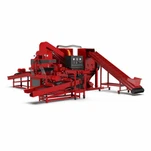
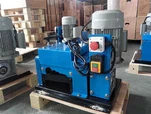
Different machines handle this process with varying degrees of automation, efficiency, and throughput. Some are compact all-in-one units suitable for small shops. Others span entire warehouse bays with conveyors, pre-shredders, and multiple separation stages.
The Price Tag: What You'll Actually Pay
Let's talk real numbers. Equipment costs vary dramatically based on capacity, quality, and included technology.
Machine Cost
Entry-Level Machines ($3,000–$10,000)
These are bench-top or small industrial units suited for light-duty processing. They typically handle 50–200 pounds per hour and work best with thinner wires. Perfect for a small electrical contractor or hobbyist recycler, but they won't support a full-time commercial operation.
Mid-Range Industrial Granulators ($10,000–$30,000)
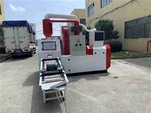
This is the sweet spot for many small to medium recycling businesses. These machines process 400–1,000 pounds hourly, handle various wire gauges, and include decent separation systems. You'll find reputable brands like Guidetti, Eldan, or Stokkermill in this range.
High-Capacity Systems ($30,000–$50,000+)
Fully automated lines processing several tons per day live here. These include pre-shredders, granulators, multiple separation stages, dust collection, and control systems. They're for established recyclers with consistent feedstock volumes.
The Hidden Costs Most Buyers Miss
The machine price is just the beginning. Smart buyers budget for:
Pre-Shredders and Support Equipment – Most granulators work best with pre-shredded material. Adding a shredder, conveyors, and extra separation gear can easily double your equipment investment. Budget $3,000–$20,000 extra depending on system complexity.
Installation and Site Preparation – Concrete pads, electrical upgrades (three-phase power is often required), ventilation, and safety barriers. I've seen installations run $500 for simple setups and exceed $5,000 for complex ones requiring building modifications.
Shipping and Import Fees – Many granulators come from Europe or Asia. Shipping a 5-ton machine plus customs, brokerage, and taxes can add 15–25% to your purchase price.
Training and Commissioning – Some suppliers include this; others charge $1,000–$10,000 extra. Don't skip it-improper setup destroys profits.
What It Costs to Run: Ongoing Expenses
Ownership doesn't end at installation. These machines consume resources continuously.
Labor Requirements
A small system might need one operator plus part-time help for loading and unloading. Larger operations require multiple staff: operators, sorters, maintenance personnel. Factor $40,000–$80,000 annually per full-time employee including benefits, depending on your location.
Power Consumption
Granulators are power-hungry. A 30-horsepower motor running full-time can add $1,000–$3,000 monthly to your electric bill. Larger systems with multiple motors consume substantially more. Calculate: motor kW × hours run × your local rate = significant line item.
Wear Parts and Maintenance
Knives are the big expense-they dull and need sharpening or replacement. Screens, belts, bearings, and motors also require attention. Annual maintenance typically runs 2–10% of equipment cost. For a $10,000 machine, that's $200–$1,000 yearly.
Consumables and Disposal
Lubricants, filters, and replacement parts add up. Plus you must dispose of the separated plastic insulation. Depending on your area, this might mean paying landfill fees or even hazardous waste charges if you process certain cable types.
The Revenue Side: What You'll Earn
Now for the encouraging part. Processed copper commands premium prices.
Copper Granule Value
Clean copper granules (99% purity) sell for 5–15% more than #2 copper scrap. With copper trading historically between $3–$5 per pound, that premium adds up. At current prices, you might net $6,000–$9,000 per metric ton after all processing costs, depending on purity and market conditions.
Different wire yields different copper percentages:
Household wiring (THHN) – 60–75% copper by weight
Communications cable – 40–60% copper
Automotive wire – 50–70% copper
Industrial power cable – 70–85% copper
Low-grade mixed cable – 30–50% copper
Building Your ROI Model: Realistic Numbers
Let's work through an example with conservative assumptions.
Machine cost: $25,000 (entry-level industrial)
Throughput: 150 lbs/hr, 4 hrs/day, 200 days/year = 120,000 lbs
Copper recovery: 55% average mix = 66,000 lbs = 33 tons
Copper price: $2.75/lb = $5,500/ton
Gross copper value: 33 × $5,500 = $181,500
Operating costs (part-time labor, power, maintenance): $45,000
Net cash flow: $136,500
Payback: $25,000 ÷ $136,500 = 0.18 years (2 months)
These numbers suggest granulators pay for themselves almost instantly. So why doesn't everyone own one?
Because the assumptions hide critical factors: consistent feedstock supply, market price fluctuations, equipment reliability, and operator skill.
Why choose us?
Electrical components
All machines use Schneider Electric components to ensure stable operation.
D2 Blade
High-quality blades are characterized by high hardness, good wear resistance, and strong toughness.


high separation rate
Stable operation, achieving a 95% recovery rate.
custom service
One-year warranty, regular customer follow-ups.